
One of South Korea’s most closely watched legal battles has ended with a record divorce settlement, but the implications stretch well beyond the personal lives of SK Group chairman Chey Tae-won and his former wife Roh Soh-yeong.
The ruling has renewed attention on the ownership of one of Asia’s most valuable technology groups at a time when its semiconductor arm, SK Hynix, is emerging as one of the biggest beneficiaries of the global artificial intelligence boom.
A Seoul court on Friday ordered Chey to pay Roh 944 billion won, or about $640 million, in cash.
Although the amount is lower than the 1.38 trillion won awarded by an appeals court in 2024, it remains the largest divorce settlement ever ordered in South Korea.
Why the case attracted global attention
The dispute has become one of South Korea’s highest-profile legal cases because it involves one of the country’s largest family-controlled conglomerates, or chaebols.
SK Group began as a textile company in 1953 before expanding into energy, telecommunications, chemicals and semiconductors.
Today it is South Korea’s second-largest chaebol after Samsung.
Millions of South Koreans use SK Telecom’s mobile services, fuel their vehicles at SK gas stations and rely on businesses across the group’s industrial network.
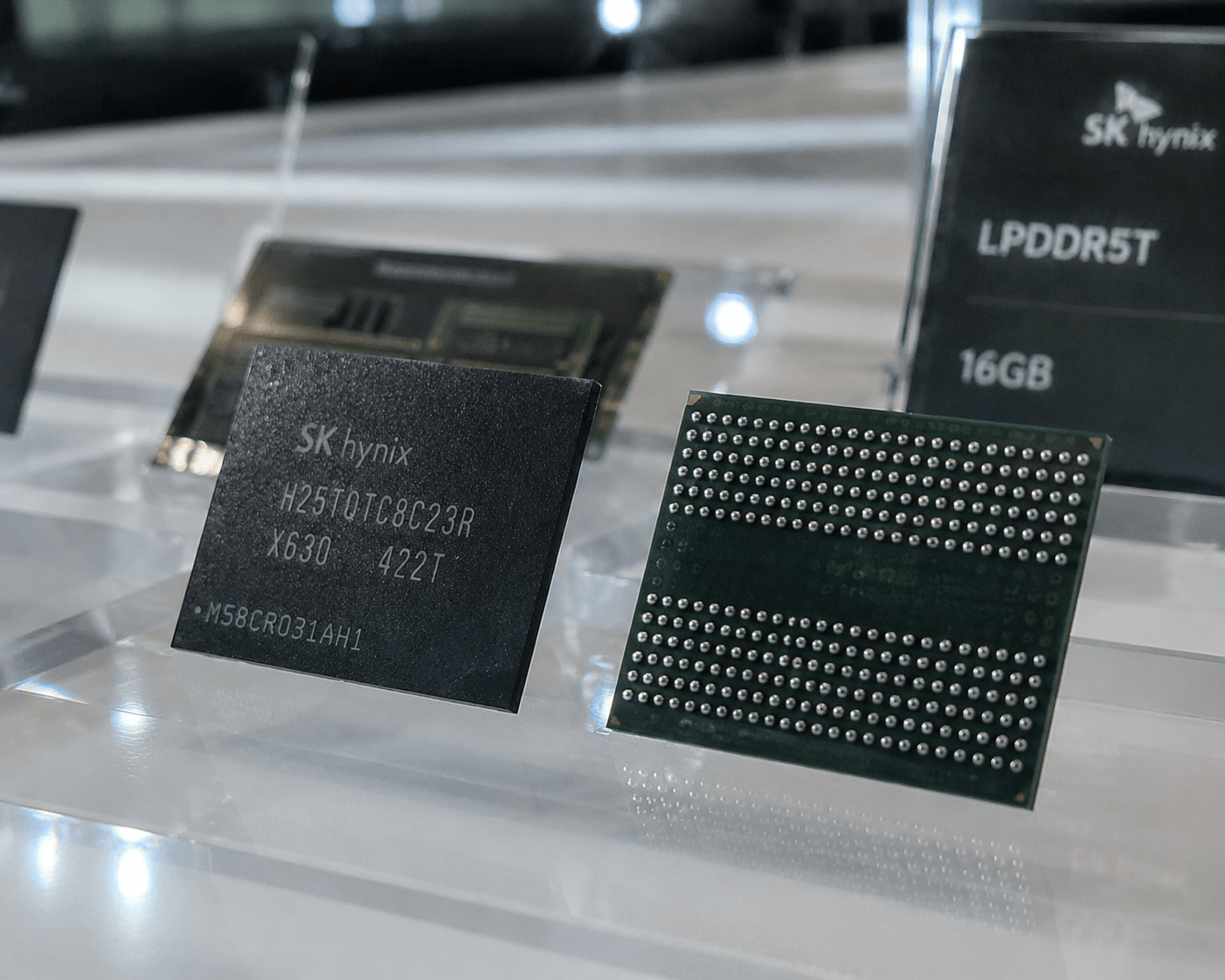
In recent years, however, the group’s international reputation has been driven primarily by SK Hynix, which has become a critical supplier of high-bandwidth memory chips used alongside Nvidia’s AI processors.
The explosive demand for AI hardware has transformed SK Hynix into one of the world’s fastest-growing semiconductor companies.
Its recent $26.5 billion US listing marked the largest share sale ever completed by a foreign company in the United States.
That success has significantly boosted the value of SK Group and Chey’s own fortune, making the divorce battle increasingly significant for investors.
How the divorce dispute unfolded
Chey and Roh were married for 35 years before their relationship collapsed after Chey publicly admitted to fathering a child with another woman.
His public announcement seeking what he described as a “clean end” to the marriage ended a union once referred to as South Korea’s “wedding of the century.”
Roh is the daughter of former South Korean president Roh Tae-woo, who led the country between 1988 and 1993.
During earlier proceedings, Roh’s legal team argued that her father’s political influence and financial support had helped lay the foundations for SK Group’s later expansion.
A lower court accepted arguments that Roh Tae-woo had provided approximately 30 billion won from a political slush fund to assist Chey during the early years of the business.
That finding contributed to the appeals court’s record-breaking 1.38 trillion won settlement in 2024.
However, South Korea’s Supreme Court later overturned that aspect of the ruling, concluding that illegally obtained political funds could not legally be treated as marital assets.
Roh’s assessment would have meant a payout of billions of dollars, inflated by an AI boom that’s boosted demand for the memory chips made by SK Hynix, a subsidiary of SK Group.
On Friday, the court ruled that Chey’s stake in SK Inc. and other assets formed part of the marital estate because they were accumulated during the marriage and both spouses contributed to preserving and increasing their value.
It said Roh’s contributions extended beyond managing the household and raising their children to supporting activities related to SK Group
Why valuation became the key battleground
Although the Supreme Court removed the issue of the alleged political funds, another question became even more important: when should Chey’s assets be valued?
Chey argued that the court should use an earlier valuation before the AI boom dramatically increased the value of SK Hynix and related SK Group companies.
Roh wanted the court to calculate the settlement using much higher, current market valuations after SK Hynix’s AI-driven rally.
The court ultimately chose April 16, 2024, the date when the original appeal completed fact-finding, as the formal valuation point.
However, judges also acknowledged that the subsequent increase in SK Group’s value reflected Chey’s management of the business and considered that appreciation when determining how the marital assets should be divided.
The court ultimately awarded Roh one-third of the marital estate, down from the 35% share granted in the earlier appeals ruling.
The panel explained, “Although the stock price rose significantly, it cannot be said that Chey’s managerial contribution had no effect on that rise.”
“Since shares are assets with high price volatility, the value of the joint property can vary greatly depending on when the closing date of arguments is set,” it said, adding that it is difficult to conclude that even profits or losses arising from whether the shares are disposed of after the divorce becomes final must all be shared with the former spouse.
Why investors were closely watching
The case has raised repeated concerns that Chey might be forced to sell shares in SK Group’s holding company to finance the settlement.
Chey does not directly own SK Hynix shares.
Instead, he is the largest shareholder of SK Inc., the group’s holding company, which owns a 32% stake in SK Square, itself the largest shareholder of SK Hynix.
He holds a 17.9% stake in SK Inc., and his wealth is estimated at $5.4 billion, according to Forbes.
Any forced sale of those holdings could potentially weaken Chey’s influence over South Korea’s second-largest conglomerate.
Friday’s ruling eased some of those concerns.
Rather than ordering Chey to transfer shares, the court ruled that he should retain ownership while satisfying the settlement entirely through a cash payment.
Judges specifically cited the importance of preserving management stability at SK Group.
That means Chey may still need to raise funds through borrowing, pledging shares as collateral or selling other assets, but analysts believe the ruling makes a loss of management control considerably less likely.
Corporate governance research firm Leaders Index said the decision is unlikely to materially alter control of SK Group despite the substantial financial obligation, Reuters reported.
What happens next?
The ruling does not necessarily end the legal battle.
Lawyers representing Chey said they would review the judgment before deciding whether to appeal again.
Either party can still return the case to South Korea’s Supreme Court.
For investors, however, attention is likely to shift back toward SK Hynix’s AI-driven growth rather than courtroom developments.
As demand for advanced AI memory chips continues to accelerate globally, SK Hynix remains central to Nvidia’s supply chain and South Korea’s ambitions to strengthen its position in the global semiconductor industry.
While the divorce settlement represents one of the largest personal financial awards in South Korean history, the court’s decision to preserve Chey’s ownership structure has largely removed fears of an immediate disruption to the management of one of the world’s most strategically important chip suppliers.
The post How SK Hynix's surge played a role in South Korea's $640M divorce settlement appeared first on Invezz